

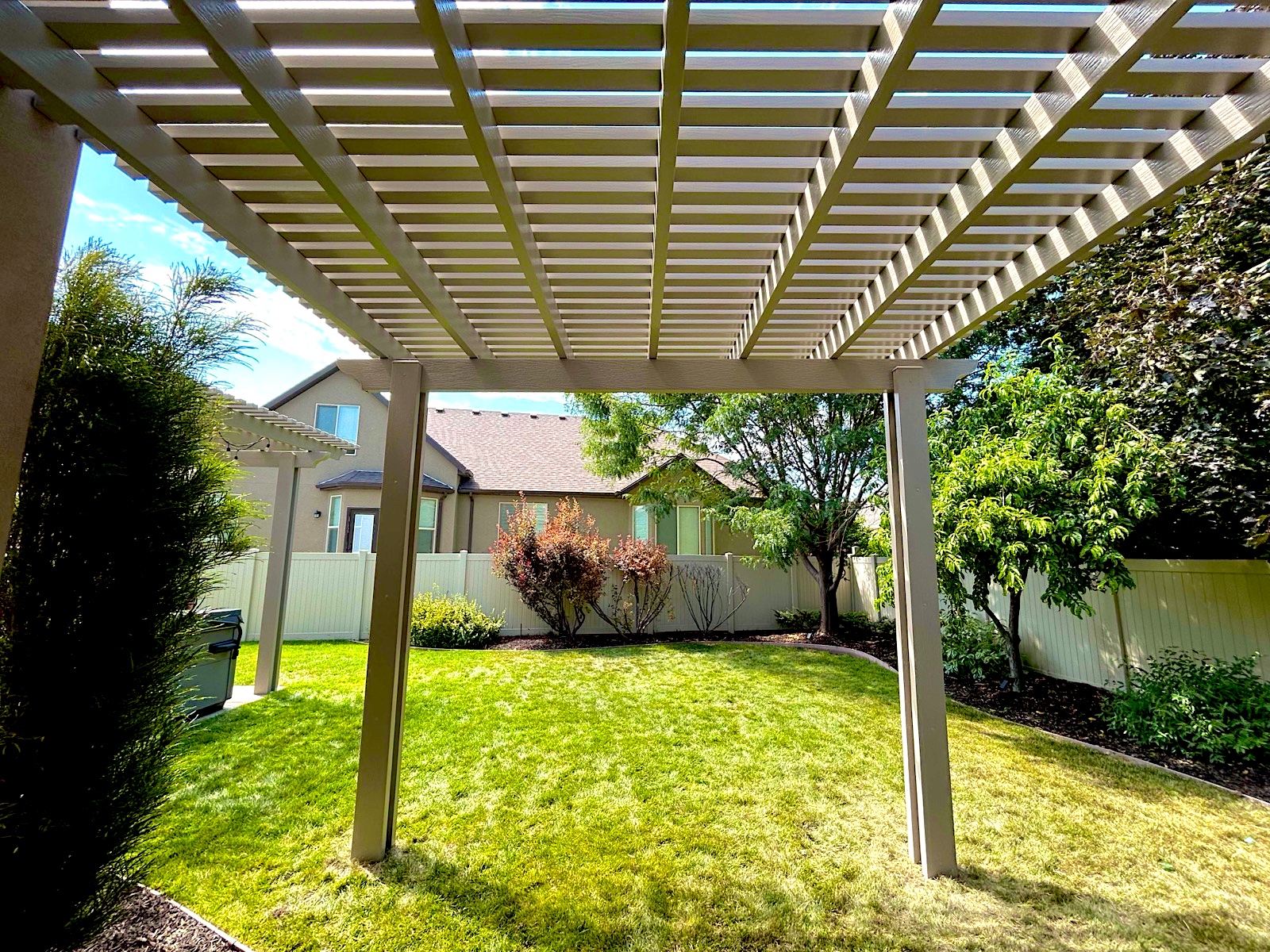




Pergola vs Pavilion: Permanent Shade in Utah
A pergola and a pavilion both give you permanent outdoor shade, but they are built for different jobs. A pergola is an open, airy structure with a slatted or louvered top that filters sunlight while letting air and light through. A pavilion is a fully roofed structure that blocks sun and sheds rain and snow completely. If you want dappled shade and an open feel, choose a pergola. If you want full protection from sun, rain, and Utah snow year-round, choose a pavilion. The right call depends on your yard, your climate exposure, and how you actually want to use the space.
At Huish's, we have been helping Utah families make this exact decision since 1936. Here is how to think it through.
The core difference: open top vs solid roof
The easiest way to understand pergola vs pavilion is to look up.
A pergola has an open framework overhead. Slats, beams, or adjustable louvers break up the sun and cut the harshest heat, but light and breeze still pass through. It feels connected to the sky. You get shade without feeling boxed in.
A pavilion has a solid, weatherproof roof. It creates a true outdoor room. Rain rolls off. Sun is fully blocked. You can host under it in almost any weather because the overhead is closed.
Neither is better across the board. They solve different problems.
☀️ When a pergola makes sense
Choose a pergola when you want atmosphere and airflow more than total cover. It is ideal for defining a patio, framing a dining area, or adding vertical structure to a yard that feels flat.
Our powder-coated aluminum pergolas are rust-proof and low maintenance, which matters in Utah where dry summers and wet winters trade off hard. They pair beautifully with pools and patios, and they give you stylish shade without the upkeep of wood.
Want to see how a pergola reshapes a patio? We break it down in our guide on how a pergola changes your patio.
🏠 When a pavilion makes sense
Choose a pavilion when you want a full outdoor room you can use rain or shine. If you are building an outdoor kitchen, a covered lounge, or a gathering space that needs to work in every season, the solid roof earns its keep.
A pavilion also protects the furniture and features underneath it. That solid roof keeps sun off your seating and rain off your grill, which extends the life of everything you put beneath it.
Snow load: the Utah factor you cannot skip
This is where Utah homeowners have to think harder than folks in milder climates. Our winters bring real snow, and snow is heavy. Any permanent shade structure has to handle that load safely.
A pavilion with a solid roof needs to be engineered so snow either sheds off or the roof carries the weight without strain. Roof pitch, framing, and material all factor in. A well-built pavilion is designed to take on a snowy Utah winter and keep standing for decades.
A pergola handles snow differently depending on its top. An open-slat pergola lets snow fall through, so it collects less weight overhead. A louvered pergola with an adjustable top can be closed for shade in summer and managed through winter. Either way, the frame still needs to be sturdy enough for wind and the load that does accumulate.
The lesson: do not buy a shade structure based on looks alone. In Utah, the build has to match the winter. That is exactly why custom fabrication matters, and why we engineer every structure for the conditions it will actually face.
❄️ Materials that hold up here
We build with powder-coated aluminum for pergolas because it is rust-proof and shrugs off moisture year after year. For pavilions and patio covers, we work with aluminum panel systems (Flat Pan, W Pan, Insulated, and Combo) that deliver full shade and rain protection with low maintenance.
Utah's climate is tough on cheap outdoor products. The freeze-thaw cycles, the UV exposure, the snow: it all adds up. Durable materials are not a luxury here, they are the whole point of choosing permanent patio shade in Utah.
Which fits which yard?
Here is a practical way to match the structure to your space.
- Small or narrow patios: A pergola keeps the space feeling open and does not overwhelm it. The airy top adds shade without making a tight yard feel smaller.
- Poolside and lounge areas: A powder-coated aluminum pergola gives stylish, rust-proof shade that stands up to splashing and sun.
- Outdoor kitchens and full gathering spaces: A pavilion (or a solid aluminum patio cover) protects appliances, furniture, and guests in any weather.
- Existing porches and carports: Our aluminum patio covers attach cleanly and deliver full shade plus rain protection with minimal upkeep.
- Yards that need year-round use: Go solid. A pavilion or patio cover lets you use the space through Utah's rain and snow, not just July.
Do you need shade all day, or just relief from the sun?
Another honest question to ask yourself: how much control do you want?
If your main goal is beating the afternoon sun on a west-facing patio, you may not even need a fixed pavilion. A pergola paired with drop shades can transform how usable a patio feels across the day. We cover that combination in our post on drop shades for an all-day Utah patio.
If you want the space to function like an indoor room extended outside, no matter the weather, the pavilion is the answer. Full roof, full protection, full-season use.
We are not just building shade. We are helping families create spaces they actually want to live in.
Let's find the right fit for your yard
The best way to decide between a pergola and a pavilion is to talk through your yard, your goals, and your winters with people who build these every day. We have done it for four generations, and every structure we make is custom fabricated to fit your home and Utah's climate.
Come see our work and get a feel for the materials in person, or reach out and we will help you plan it. Request a quote or visit our showroom here.
Frequently asked questions
🤔 What is the main difference between a pergola and a pavilion?
A pergola has an open, slatted, or louvered top that filters sunlight while letting air and light pass through. A pavilion has a solid, weatherproof roof that fully blocks sun and sheds rain and snow. Pergolas offer airy shade, while pavilions create a fully covered outdoor room.
❄️ Can a pergola or pavilion handle Utah snow?
Yes, when it is built for it. We engineer our structures for Utah's real winter conditions, using powder-coated aluminum for pergolas and durable aluminum panel systems for pavilions and patio covers. The key is matching the build and materials to the snow and wind your yard actually sees.
🏡 Which is better for a small patio?
A pergola usually suits smaller patios best because its open top keeps the space feeling airy and does not visually crowd a tight yard. If you need full weather protection on a compact space, an attached aluminum patio cover can be a smart alternative to a freestanding pavilion.
💬 How do I decide which one is right for me?
Start with how you want to use the space and how much weather protection you need. If you want dappled shade and an open feel, go pergola; if you want a year-round covered room, go pavilion. Reach out to us and we will walk your options based on your yard and budget.

Explore our latest blogs & insights for inspiration
The Best of Huish’s, Delivered Right To Your Email Inbox
Tips, updates, and outdoor inspiration delivered straight to your inbox. No spam. Just the good stuff.