

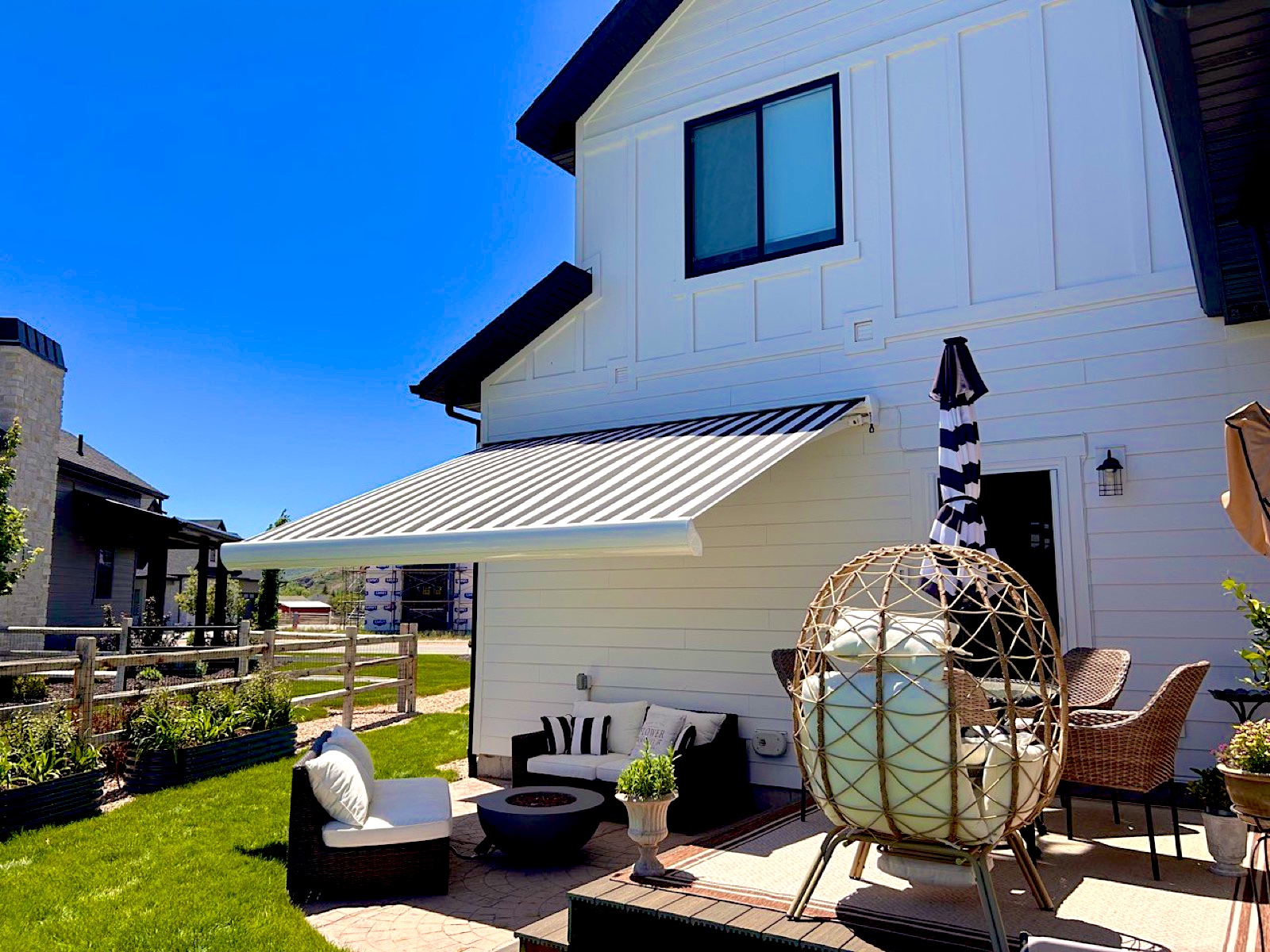




Motorized Awnings: Are They Worth It?
Yes, a motorized retractable awning is worth it for most Utah patios, especially if you want shade at the touch of a button and protection from sudden weather. A motorized retractable awning is a fabric shade on a powder-coated frame that extends and retracts with a small electric motor instead of a hand crank. Add a wind sensor and it practically manages itself.
What a motorized retractable awning actually is
At Huish's, our retractable awnings are built with Sunbrella and WeatherMax fabrics on powder-coated frames. They mount over decks, patios, balconies, windows, and storefronts. The motorized version swaps the crank arm for a quiet motor, so extending 12 or more feet of shade takes seconds, not sweat.
The fabric, frame, and build quality are the same craftsmanship we have put into every project since 1936. The difference is how you operate it, and that difference matters more than most people expect.
🔋 How the motor works
A tubular motor lives inside the roller. Press a remote or wall switch and the awning glides out or rolls back in. Many homeowners add a sun sensor to extend automatically on bright days, or a timer so the patio is shaded by the time they walk outside.
The real headline feature, though, is the wind sensor.
Why an awning with a wind sensor changes the game in Utah
Utah weather does not ask permission. A calm afternoon can turn into a gusty evening fast, and wind is the number one enemy of any extended awning. An awning with a wind sensor solves this quietly and automatically.
When the sensor detects wind above your set threshold, it retracts the awning on its own, even if you are not home. That single feature protects your fabric, your frame, and your investment year after year.
An awning that retracts itself before the wind hits is an awning that lasts longer. Protection you never have to think about is the whole point.
Our exterior screens already come in wind-rated options, and we bring that same weather-first thinking to motorized awnings. If durability against Utah gusts is your concern, the wind sensor is the answer.
🌬️ Set it and forget it
Pair a wind sensor with a sun sensor and your awning responds to the day for you. Shade rolls out when the sun is strong and rolls back when the wind picks up. You get the comfort without the babysitting.
Motorized vs manual crank: the honest comparison
A manual crank awning is not a bad choice. It is simpler, costs less up front, and works without power. But convenience and long-term protection tell a different story. Here is how they stack up.
| Feature | Motorized | Manual crank |
|---|---|---|
| Operation | Button, remote, or automatic | Hand crank every time |
| Wind sensor option | Yes, retracts automatically | No, you must be present |
| Sun and timer automation | Available | Not available |
| Ease for large spans | Effortless | Harder as size grows |
| Works during power outage | Needs backup or manual override | Always works |
| Up-front cost | Higher | Lower |
| Long-term fabric protection | Excellent with sensors | Depends on the owner |
The pattern is clear. Manual wins on simplicity and price. Motorized wins on convenience, automation, and the kind of protection that extends the lifespan of the whole unit.
Does motorized actually last longer?
Here is the part people miss. The awning that gets retracted every night and before every storm outlives the one that gets left out. With a manual crank, that discipline depends entirely on you being home and willing to crank. With a wind sensor, it happens automatically.
Less time exposed to wind, sun, and weather means less fabric fade, less frame stress, and fewer repairs. So while a motor is one more component, the automation it enables tends to protect the awning better than a manual unit ever could.
Either way, good maintenance still matters. Our guide on prepping shade for Utah summers covers the seasonal care that keeps any awning looking sharp.
Who should choose motorized?
Motorized makes the most sense in a few clear situations:
- Large awnings. The wider the span, the more you appreciate skipping the crank.
- Windy or exposed patios. A wind sensor pays for itself in protection.
- Frequent use. If you shade the patio daily, easy operation keeps you actually using it.
- Second homes or travel. Automation guards your awning while you are away.
- Storefronts and commercial spaces. Reliable, hands-off shade for daily operation.
If you want the flexibility of shade on demand versus a permanent structure, our breakdown of retractable vs fixed awnings is a helpful next read.
🛠️ Built and installed by us
Every motorized awning we build is custom-fit to your space using the same in-house fabrication and hands-on expertise we have carried for four generations. We help you choose the fabric, the frame finish, and the automation that fits how you live outdoors. That guidance is the difference between a gadget and a solution.
Frequently asked questions
🤔 Is a motorized retractable awning worth the extra cost?
For most homeowners, yes. The convenience of button or automatic operation plus the fabric protection from a wind sensor usually justifies the higher up-front price. If your patio is small and rarely used, a manual crank may be plenty.
🌬️ How does an awning with a wind sensor protect my investment?
The sensor detects wind above your set threshold and retracts the awning automatically, even when you are not home. Since wind is the biggest threat to an extended awning, this feature reduces stress on the fabric and frame and helps the awning last longer.
⚡ What happens to a motorized awning during a power outage?
Most motorized awnings include a manual override so you can retract the unit even without power. We walk you through the override on your specific model at install, so you are never stuck with an extended awning during an outage.
🧵 Can you retrofit or custom-build a motorized awning for my space?
We build every awning to fit your patio, deck, or storefront using Sunbrella and WeatherMax fabrics on powder-coated frames. Reach out and we will assess your space and recommend the right motor and sensor setup for Utah conditions.
Ready to see the difference for yourself? Visit our showroom or request a quote and let our team design a motorized retractable awning that fits your home and stands up to Utah weather. Learn more about our family and our work at Huish's Enterprises.

Explore our latest blogs & insights for inspiration
The Best of Huish’s, Delivered Right To Your Email Inbox
Tips, updates, and outdoor inspiration delivered straight to your inbox. No spam. Just the good stuff.